Advanced Care for Irregular Corneas

If straight lines appear wavy or your vision seems increasingly distorted, keratoconus may be the cause. This condition occurs when the normally round cornea gradually becomes thinner and begins to bulge outward into a cone-like shape, affecting how light enters the eye.

Because the cornea plays a crucial role in focusing vision, even small changes in its shape can cause noticeable visual distortion. At Richlin Eye, we provide comprehensive diagnosis and keratoconus treatment in Los Angeles and Beverly Hills, including advanced specialty contact lens fittings designed for irregular corneas.

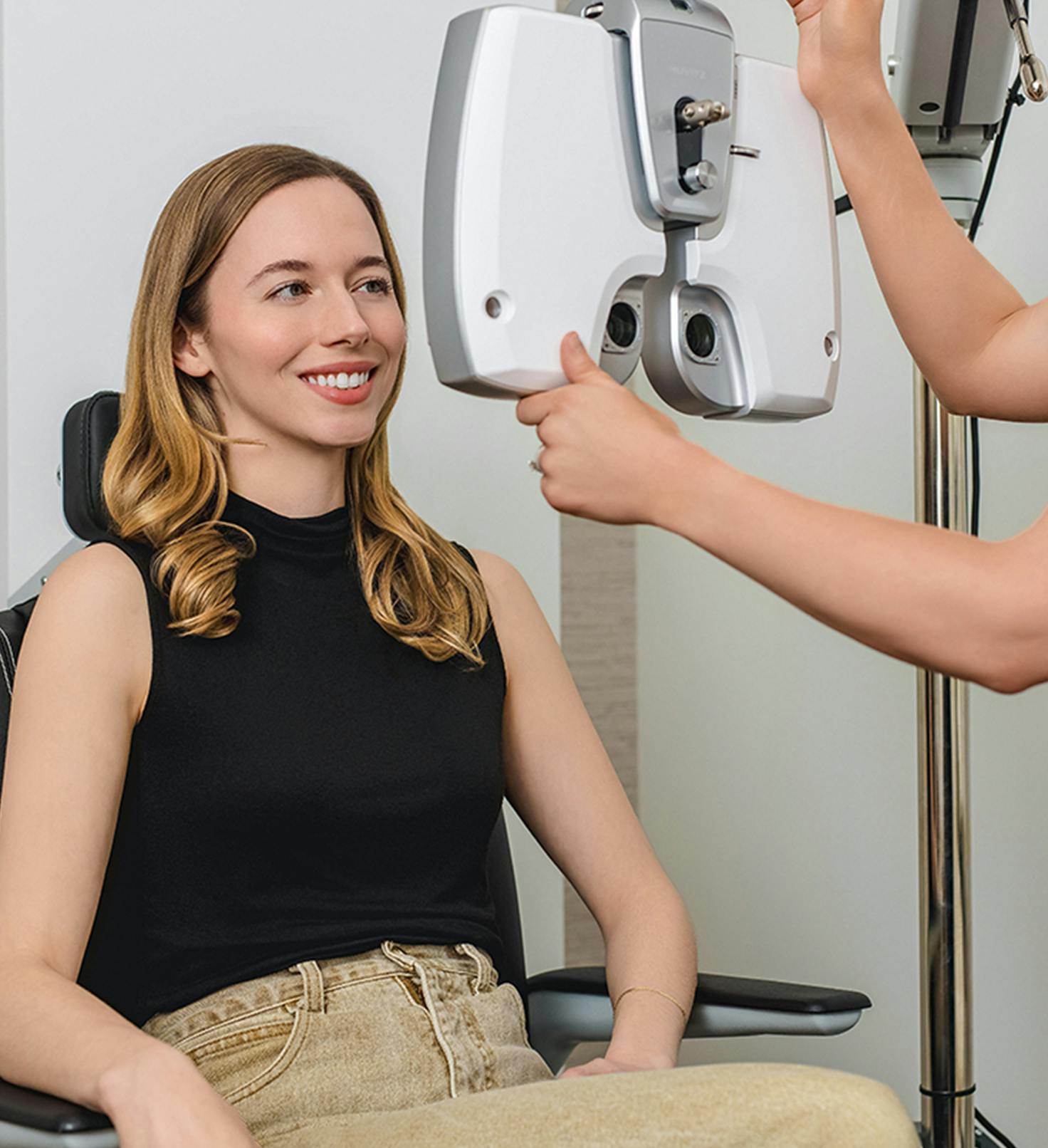
Woman getting an eye exam done

What Is Keratoconus?

Keratoconus is an eye condition that affects the cornea: the clear, dome-shaped surface at the front of the eye that helps focus light. In keratoconus, the cornea gradually thins and bulges outward, creating an irregular cone shape. This structural change prevents light from focusing properly on the retina, leading to blurred or distorted vision.

Keratoconus often begins in the late teenage years or early adulthood and may progress slowly over time. Early detection is important because proper monitoring and treatment can help preserve visual function and improve vision quality.


Symptoms of Keratoconus

Keratoconus often develops gradually, and symptoms may worsen over time as the cornea changes shape. Common symptoms include:

  • Blurred or distorted vision
  • Straight lines appearing bent or wavy
  • Increased sensitivity to light and glare
  • Frequent changes in eyeglass prescription
  • Eye redness or irritation
  • Difficulty wearing standard contact lenses

Because keratoconus may affect each eye differently, patients sometimes notice uneven vision between their eyes. 

Banner media

Schedule A Consultation

Contact Us

What Causes Keratoconus?

The exact cause of keratoconus is not fully understood, but research suggests that genetic and environmental factors may contribute to the condition. Risk factors may include:

  • Family history of keratoconus
  • Chronic eye rubbing
  • Allergies that cause frequent eye irritation
  • Certain connective tissue disorders

Routine eye exams and corneal imaging allow doctors to identify early changes in the cornea and monitor progression.

How Keratoconus Is Diagnosed

Keratoconus is typically diagnosed during a comprehensive eye exam. During the evaluation, our doctors assess the shape and curvature of the cornea to detect irregularities. Diagnostic testing may include:

Corneal Topography

Detailed mapping of the cornea’s surface helps identify early changes in shape.

Vision Testing

We measure visual acuity and evaluate how the irregular cornea affects vision.

Corneal Health Evaluation

The doctor examines the structure and thickness of the cornea.

Background media

Options for Keratoconus Treatment in Los Angeles

Treatment for keratoconus depends on the severity of the condition and how much the cornea has changed. Our doctors evaluate each patient’s condition carefully and coordinate appropriate treatment when additional procedures are needed.

Specialty Contact Lenses

Many patients benefit from scleral contact lenses, which are designed to vault over the irregular cornea and create a smooth optical surface. These custom lenses can significantly improve visual clarity and comfort for patients with keratoconus.

Corneal Cross-Linking

Collagen cross-linking is a treatment that uses specialized eye drops and ultraviolet light to strengthen the cornea and help slow the progression of keratoconus.

Additional Surgical Options

In advanced cases, procedures such as Intacs implants or corneal transplantation may be recommended to improve corneal structure and vision.

Background media

Results & Ongoing Care

Many patients with keratoconus achieve significant improvements in visual clarity with properly fitted specialty contact lenses. Because the condition can change over time, ongoing monitoring is important to ensure that vision remains stable and that lenses continue to fit properly.

Regular eye exams allow our doctors to track changes in the cornea and adjust treatment as needed. With proper care and monitoring, many individuals with keratoconus are able to maintain functional vision and continue their daily activities comfortably.

Doctor media

Why Choose Richlin Eye?

Richlin Eye provides advanced diagnosis and management for complex vision conditions such as keratoconus.

  • A Family Legacy of Eye Care Since 1983: Richlin Eye has served generations of families throughout Los Angeles with trusted, relationship-focused eye care.
  • Specialty Contact Lens Expertise: Our doctors are experienced in fitting advanced contact lenses, including scleral lenses designed for irregular corneas.
  • Advanced Diagnostic Technology: Modern corneal imaging allows us to detect subtle changes in corneal shape and monitor keratoconus progression.
  • Trusted by Patients Across Los Angeles: Richlin Eye has earned the highest number of five-star Google reviews of any optometry practice in Los Angeles.

Schedule Your Eye Exam

If you experience distorted vision, sensitivity to light, or frequent changes in your prescription, a comprehensive eye exam can help determine whether keratoconus may be present. Richlin Eye provides specialized evaluation and keratoconus treatment in Los Angeles and Beverly Hills. Early diagnosis allows for more effective treatment and long-term vision protection.

Frequently Asked Questions Keratoconus Treatment

What causes keratoconus?

Keratoconus is believed to involve a combination of genetic and environmental factors, including family history and chronic eye rubbing.

Can keratoconus cause blindness?

While keratoconus can significantly affect vision, many patients maintain good functional vision with proper treatment and specialty contact lenses.

What are scleral lenses?

Scleral lenses are large-diameter contact lenses designed to vault over the cornea, creating a smooth optical surface for clearer vision.

At what age does keratoconus usually develop?

Keratoconus often begins during the teenage years or early adulthood and may progress gradually.

Can keratoconus get worse over time?

Yes. The condition can progress, which is why early diagnosis and monitoring are important.

Is surgery always required for keratoconus?

Not always. Many patients manage keratoconus successfully with specialty contact lenses, although some may benefit from additional treatments depending on severity.

Contact us media
Accessibility: If you are vision-impaired or have some other impairment covered by the Americans with Disabilities Act or a similar law, and you wish to discuss potential accommodations related to using this website, please contact our Accessibility Manager at 310-276-5333.
Contact Us